

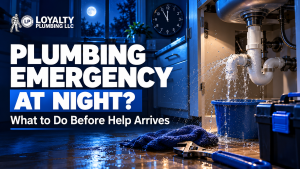
It is 2 a.m., and you wake up to the sound of running water that should not be there. Maybe a pipe has burst, the toilet is overflowing, the water heater is leaking across the garage floor, or a drain is pushing sewage back into your tub. Panic is normal. But the next ten minutes matter more than most homeowners realize.
The good news is that you do not have to be a plumber to limit the damage. A few quick steps can keep a bad night from turning into an expensive month of repairs. Here is what to do while you wait for your emergency plumber.
Quick answer: If you have a plumbing emergency at night, shut off your main water valve, turn off electricity near any standing water, stop using the affected drains and fixtures, contain the leak with towels and buckets, take photos for insurance, and call a licensed emergency plumber right away.
What Counts as a Plumbing Emergency at Night?
Not every drip needs a midnight call. But these problems should not wait until morning:
- A burst or leaking pipe that is flooding a room
- Sewage backing up into tubs, sinks, or floor drains
- A toilet that overflows and will not stop
- A leaking or failing water heater
- No water at all to the whole house
- Water near outlets, appliances, or your electrical panel
- A gas smell near a water heater or gas appliance
If water is actively spreading or sewage is involved, treat it as an emergency. Every extra hour means more damage to floors, drywall, and belongings.

Step 1: Shut Off the Main Water Supply
This is the most important move. Find your main shut-off valve, usually near the water meter, along an exterior wall, or in the garage. Turn it fully off. Ball valves (a lever) need a quarter turn, and round wheel valves need to be turned clockwise until they stop.
If you cannot find it, or it will not budge, do not force it. Tell the plumber when you call so they can come prepared.
Step 2: Turn Off the Electricity if Water Is Near Power
Water and electricity are a dangerous mix. If water is pooling near outlets, appliances, or your breaker box, switch off power to that area from the panel, but only if you can reach the panel without stepping through water. If you cannot do it safely, stay out and let the plumber or an electrician handle it.
Step 3: Act Immediately if You Smell Gas
A rotten-egg smell near your water heater or any gas line is a different kind of emergency. Do not flip switches or light anything. Get everyone outside and call your gas utility or 911 from a safe distance. Plumbing can wait. Safety cannot.
Step 4: Drain the Lines and Release Pressure
After the main water is off, open a few faucets, starting with the lowest ones in the house, to drain the water left in the pipes. This lowers the pressure and slows any leak that is still dripping. Flush the toilets once or twice as well.
Step 5: Contain the Water
Grab towels, buckets, pans, and a wet/dry vacuum if you have one. Place buckets under active drips and push towels along the floor to stop water from spreading toward carpet or hardwood. If a pipe is spraying, wrap it with a towel or use a pipe repair clamp. This is only a temporary measure, but it can buy you valuable time.
Step 6: Handle Sewage Backups Carefully
If wastewater is coming up through a tub, shower, or floor drain, stop using every sink, toilet, washer, and dishwasher in the house. Each gallon you send down the drain has nowhere to go but back up. Keep kids and pets out of the area, because sewage carries bacteria. Wear rubber gloves and boots if you must enter, and do not mix chemical drain cleaners, which can damage your pipes and make the plumber’s job harder.
A backup that hits several fixtures at once often points to a main sewer line problem, such as roots or a collapsed section. That calls for a professional sewer line inspection, not a plunger.
Step 7: Shut Down a Leaking Water Heater
If the leak is coming from your water heater, turn off its power at the breaker (electric) or set the gas control to “off” or “pilot” (gas). Then close the cold-water supply valve on top of the unit. Do not touch the water pooling around it until the power is off, because it may be very hot. If the tank is old and leaking from the bottom, it is usually time to replace the water heater rather than repair it.
Step 8: Take Photos and Protect Your Belongings
Before you start cleaning, take clear photos and short videos of the damage. Your insurance company will want them. Then move furniture, rugs, and valuables out of the wet area, and cut power to electronics first. Running fans and towel-drying early helps prevent mold, which can start growing within a couple of days in Texas humidity.
Step 9: Call a Licensed Emergency Plumber
Once the situation is under control, call a licensed plumber. Be ready to share:
- Where the problem is (kitchen, bathroom, yard, garage)
- What you see, hear, or smell
- Whether you shut off the main water and power
- Your address and a good callback number
The more detail you give, the more prepared the plumber arrives, with the right tools and parts on the truck.
What Not to Do During a Plumbing Emergency
- Do not ignore it and hope it stops by morning
- Do not use chemical drain cleaners on a backup
- Do not keep running water “just to see if it clears”
- Do not touch electrical items while standing in water
- Do not attempt major pipe repairs yourself at night
Frequently Asked Questions
What is the first thing to do in a plumbing emergency?
Shut off the main water supply. This stops new water from entering the house and limits flooding while you wait for help.
Is a leaking pipe at night an emergency?
Yes, if water is spreading, spraying, or near electrical items. A slow drip under a sink can usually wait until morning, but an active leak should be treated right away.
Can I use my plumbing after shutting off the water?
No. Keep the main valve closed and avoid using drains if there is a sewage backup, until the plumber has checked the system.
How do I find a reliable emergency plumber near me?
Look for a licensed, insured company that offers after-hours service and serves your area. Local reviews and a clear phone number are good signs.
Need an Emergency Plumber Tonight? Call Loyalty Plumbing LLC
Plumbing problems rarely show up at a convenient time. That is why Loyalty Plumbing LLC offers emergency service after hours and on Sundays, serving homeowners across Tomball, Cypress, Katy, Bryan, Hearne, and the greater Houston area. Our licensed and insured team will get to you quickly, find the cause, and get your home back to normal at a fair price.