

The good news is that these habits are easy to change. Here are seven common ones that quietly shorten the life of your plumbing, why each one hurts, and what to do instead.
Quick answer: The everyday habits that damage pipes most are pouring grease down drains, flushing wipes and other non-flushables, overusing chemical drain cleaners, ignoring small leaks, skipping water heater maintenance, ignoring hard water, and living with high water pressure. Changing these habits can help your plumbing last longer and avoid costly repairs.
1. Pouring Grease and Food Down the Kitchen Drain
Why it hurts: Hot grease looks like a liquid, so it feels safe to pour down the sink. But as it cools, it turns solid and sticks to the inside of your pipes. Over time, it traps food scraps, coffee grounds, and soap, building a thick layer that narrows the pipe until water can barely get through.
Signs you are doing damage:
- The kitchen sink drains slower than it used to
- Bad smells coming from the drain
- Water backing up into the sink when the dishwasher runs
What to do instead: Pour cooled grease into a can or jar and throw it in the trash. Wipe greasy pans with a paper towel before washing, and use a drain strainer to catch food. If the drain is already slow, professional drain cleaning clears the buildup instead of just poking a hole through it.
2. Flushing Wipes, Cotton, and Other “Flushable” Items
Why it hurts: Toilets are made for waste and toilet paper, and nothing else. Wipes, even ones labeled “flushable,” do not break down the way paper does. They tangle together, catch on rough spots in the pipe, and form clogs that grow larger every day. Cotton balls, dental floss, feminine products, and paper towels do the same thing.
Signs you are doing damage:
- Toilets that clog often
- Gurgling sounds from drains when you flush
- Backups in more than one fixture at the same time
What to do instead: Put a small trash can with a lid next to every toilet and make it a house rule: only waste and toilet paper go down. If you keep having backups in several fixtures, the problem may be deeper in the main line. Our sewer line services can clear and inspect it before it turns into a full blockage.
3. Reaching for Chemical Drain Cleaners Every Time
Why it hurts: Store-bought drain cleaners feel like a quick fix, but many contain harsh chemicals that can be rough on pipes, especially older ones. They can also sit in a standing clog and sit in the pipe longer than intended, which is unpleasant for the pipe and dangerous if someone has to work on it afterward. And often, they only open a small channel through the clog instead of removing it.
Signs you are doing damage:
- You need to use the cleaner again every few weeks
- The drain clears for a day, then slows again
- Pipes or fittings look worn or discolored
What to do instead: Try a plunger or a drain snake first for simple clogs. If the same drain keeps clogging, that is a sign something is causing the buildup, and it needs a proper fix, not another bottle of cleaner.
4. Ignoring Small Leaks and Drips
Why it hurts: A drip under the sink or a faucet that never quite shuts off might seem harmless. But constant moisture corrodes fittings, rots wood and cabinets, and can lead to mold. A small leak is also often a sign that a pipe, valve, or connection is already wearing out.
Signs you are doing damage:
- A drip you have been meaning to fix for weeks
- Damp or swollen cabinet bottoms
- A musty smell near sinks, toilets, or appliances
- A water bill that keeps creeping up
What to do instead: Fix drips as soon as you notice them, and check under sinks every month or so. If you cannot find where the moisture is coming from, professional leak detection and repair can track it down, even when it is hidden inside a wall or under the floor.
5. Never Maintaining the Water Heater
Why it hurts: Over time, minerals and sediment settle at the bottom of a tank water heater. That layer makes the heater work harder, can cause popping or rumbling noises, and speeds up corrosion inside the tank. A heater that is never serviced often fails earlier than it should.
Signs you are doing damage:
- Rumbling, popping, or banging sounds when it heats
- Hot water that runs out faster than before
- Rusty-looking hot water
- Moisture around the base of the tank
What to do instead: Flush the tank on a regular schedule (many manufacturers suggest once a year) and have the unit checked for worn parts. If your heater is already old or leaking, our water heater repair and replacement team can help you decide whether to repair it or replace it before it fails.
6. Ignoring Hard Water
Why it hurts: Hard water carries minerals like calcium and magnesium. Over time, those minerals form scale inside pipes, faucets, showerheads, and appliances. Scale shrinks the opening that water flows through, reduces water pressure, and makes appliances work harder and wear out faster.
Signs you are doing damage:
- White, chalky crust on faucets and showerheads
- Spots on dishes and glass shower doors
- Soap that does not lather well
- Weak water flow that keeps getting worse
What to do instead: Clean faucet aerators and showerheads regularly, and think about treating the water at the source. Water softeners and purifiers reduce mineral buildup, which protects your pipes and appliances.
7. Living With High Water Pressure
Why it hurts: Strong water pressure feels great in the shower, but pipes, valves, and fittings are only designed to handle so much. Pressure that is too high stresses every connection in the house, which can lead to leaks, worn-out washing machine hoses, banging pipes, and a shorter life for fixtures and appliances. Many plumbing codes consider pressure above about 80 psi too high.
Signs you are doing damage:
- Loud banging sounds when you turn a faucet or appliance off
- Faucets and toilets that leak or run for no clear reason
- Hoses on appliances that burst or wear out quickly
- Water that sprays harshly out of faucets
What to do instead: Have your pressure checked with a simple gauge. If it is too high, a plumber can adjust or replace the pressure regulator. A full plumbing inspection checks pressure, valves, supply lines, and fixtures in one visit, which is a smart way to catch issues early.
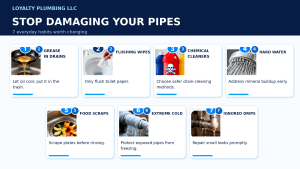
A Quick Habit Checklist
Print this and stick it on the fridge:
- Grease goes in the trash, not the sink
- Only toilet paper and waste go down the toilet
- Try a plunger or snake before chemical cleaners
- Fix drips the week you notice them
- Flush your water heater and check it yearly
- Clean aerators and showerheads, and treat hard water
- Check your water pressure once a year
Frequently Asked Questions
What shortens the life of plumbing pipes?
Common causes include grease and food buildup, flushing non-flushable items, harsh chemical drain cleaners, ongoing leaks, hard water scale, high water pressure, and lack of maintenance.
Are chemical drain cleaners bad for pipes?
They can be, especially when used often or on older pipes. For recurring clogs, a mechanical fix like snaking or professional cleaning is usually the better choice.
How often should I flush my water heater?
Many manufacturers recommend about once a year. Check your unit’s manual for the exact advice.
What is a safe water pressure for a home?
Most homes do well in the range of roughly 40 to 60 psi, and pressure above about 80 psi can stress pipes and fixtures. A plumber can test and adjust it.
How long do household pipes last?
It depends on the material, water quality, and care. Good habits and regular checkups help pipes reach the long end of their lifespan.
Want Your Pipes to Last Longer? Let Loyalty Plumbing Help
At Loyalty Plumbing LLC, we believe craftsmanship and loyalty are what great plumbing is built on. Whether you want a checkup, need a clog cleared, or suspect a hidden problem, our licensed team will explain what is going on in plain language, and fix it right the first time with honest pricing.
Let our loyalty meet your plumbing needs.
- Residential plumbing
- Licensed and experienced
- Fast response, honest pricing
- Emergency service available
- Serving Greater Houston and Bryan/College Station areas
Call (832) 298-3113
Request a Free Service Estimate