

Texas winters are mild right up until they aren’t. Our homes are built for heat, so when temperatures drop below freezing for a night or two, the pipes in attics, garages, and exterior walls take the hit. This Texas winter plumbing checklist walks you through what to do now, while the weather is still easy.
Anyone who lived through the February 2021 winter storm remembers the burst pipes, flooded homes, and plumbers booked out for weeks. Most of that damage could have been prevented with an afternoon of prep.
Quick answer: To protect your plumbing before a Texas freeze, find your main water shut-off valve, cover outdoor faucets, insulate exposed pipes, check your water heater, seal cold air leaks, and on freezing nights let faucets drip and open the cabinet doors under sinks. Keep the heat on, even if you are away.
Why Pipes Freeze (and Why They Burst)
Water expands when it freezes. Inside a closed pipe, that expansion builds pressure until the pipe cracks. Often the crack goes unnoticed until the ice thaws and water starts flowing through the damaged spot. That is when the flooding begins.
The pipes most at risk are:
- Pipes in attics, garages, and crawl spaces
- Pipes along exterior walls
- Outdoor faucets, hose bibs, and irrigation lines
- Pipes with little or no insulation
- Older pipes that are already worn or corroded
Step 1: Find Your Main Water Shut-Off Valve
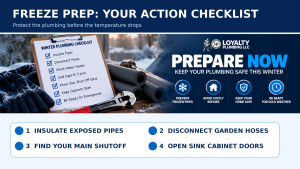
If a pipe bursts, every minute counts. Find your main shut-off valve now. It is usually near the water meter, along an exterior wall, or in the garage. Turn it off and back on to make sure it works, and tell everyone in the house where it is.
A stuck valve is a lot easier to deal with on a calm Saturday than in the middle of a flood.
Step 2: Disconnect and Cover Outdoor Faucets
Outdoor spigots are usually the first thing to freeze. Before the cold arrives:
- Disconnect garden hoses and splitters, and store them inside
- Put an insulated cover over each outdoor faucet
- Make sure the faucet is not dripping, since a drip can build ice inside the pipe
If you have a sprinkler system, shut it down and drain it. Irrigation lines are often tied into your water supply through a backflow device, so it is worth having a certified professional handle backflow prevention and testing before winter.
Step 3: Insulate Exposed Pipes
Any pipe that runs through an unheated space needs protection. Foam pipe sleeves are cheap, easy to install, and sold at any hardware store. Start with:
- Pipes in the attic, garage, and crawl space
- Pipes along exterior walls
- Pipes near vents, windows, or doors where cold air gets in
- Both hot and cold lines, not just one
If a pipe is hard to reach, or it has been patched several times already, it is probably one of the first to fail in a freeze. When pipes are that worn, whole-house repiping can be a smarter long-term fix than another repair.
Step 4: Check Your Water Heater
Your water heater works harder in winter. Incoming water is colder, and you use more hot water. Before the cold hits:
- Look for rust, leaks, or moisture around the tank
- Listen for rumbling or popping sounds
- Check the age on the label (tank heaters typically last about 8 to 12 years)
- Insulate the pipes connected to it, especially in a garage or attic
A water heater that fails during a cold snap is a bad time for everyone, including plumbers, since everyone calls at once. If yours is old or showing warning signs, have our water heater repair and replacement team look at it before the freeze.
Step 5: Schedule a Plumbing Inspection
A pre-winter checkup can spot weak points you cannot see: aging valves, worn supply lines, poorly insulated pipes, and small leaks. A plumbing inspection takes far less time than a repair and can save a lot of stress.
Do not ignore small leaks you already have, either. A slow drip can freeze and block a line, and the pressure behind it can split the pipe. Professional leak detection and repair finds hidden leaks before the cold makes them worse.
Step 6: Seal Cold Air Leaks
Cold air getting into your home puts pipes at risk, even if they look protected. Check for gaps and drafts where pipes enter the house, around dryer vents, near cable and wiring holes, and around crawl space vents. Seal them with caulk or spray foam.
Step 7: What to Do the Night Before a Freeze
When the forecast calls for freezing temperatures, do these before bed:
- Let faucets drip. A slow, steady drip on faucets served by exposed pipes keeps water moving and relieves pressure. Use both hot and cold.
- Open cabinet doors. Doing this under kitchen and bathroom sinks on exterior walls lets warm air reach the pipes.
- Keep the heat on. Set your thermostat to at least 55°F, even if you are away, and avoid big temperature swings.
- Bring in pets’ water and move plants away from outdoor pipes and faucets.
Going out of town? Do not turn the heat off. A frozen pipe in an empty house can flood for days before anyone knows. Ask a neighbor to check in during a hard freeze, or shut off the main valve and drain the lines before you leave.
What to Do If a Pipe Freezes
Even with good prep, a pipe can still freeze. Here is what to do:
- Open the faucet connected to the frozen pipe so water can flow as it thaws.
- Find the frozen section. Look for frost, bulging, or a pipe with no water flow.
- Thaw it slowly with a hair dryer, a heating pad, or warm towels. Never use an open flame, a torch, or a propane heater.
- Watch for leaks as the water starts to flow.
- Call a plumber if you cannot find or thaw the frozen spot, or you see any crack or leak.
What to Do If a Pipe Bursts
- Shut off the main water valve right away.
- Turn off electricity to any area where water is near outlets or appliances, but only if you can do it safely.
- Open faucets to drain what is left in the system.
- Move belongings out of the way and take photos for insurance.
- Call for emergency plumbing help.
Your Texas Winter Plumbing Checklist at a Glance
- Find and test the main shut-off valve
- Disconnect hoses and cover outdoor faucets
- Drain or shut down sprinkler systems
- Insulate exposed pipes in attics, garages, and crawl spaces
- Check the water heater for age, rust, and leaks
- Schedule a plumbing inspection
- Seal cold air leaks
- Let faucets drip and open cabinet doors during a freeze
- Keep the heat on at 55°F or higher
Frequently Asked Questions
At what temperature do pipes freeze?
Water freezes at 32°F, but pipes usually freeze when temperatures stay at or below freezing for several hours, especially in uninsulated areas like attics, garages, and exterior walls.
Should I leave my faucets dripping during a freeze?
Yes. A slow, steady drip keeps water moving and relieves pressure that can lead to a burst.
Should I turn off my water when a freeze is coming?
For a short freeze, many homeowners leave the water on and let faucets drip. For a long freeze, or if you will be away, shutting off the main valve and draining the lines may be safer. When in doubt, ask a plumber.
How can I tell if my pipes are frozen?
Common signs are no water or just a trickle from a faucet, frost on exposed pipes, and strange smells from drains.
Does homeowners insurance cover burst pipes?
It depends on your policy. Check with your insurance provider, and take photos of any damage right away.
Get Your Home Ready With Loyalty Plumbing
At Loyalty Plumbing LLC, we believe craftsmanship and loyalty are what great plumbing is built on. Whether you are in Katy, Cypress, Tomball, or the Bryan/College Station area, our licensed team can inspect your pipes, check your water heater, and fix weak spots before the first freeze arrives, with honest pricing and work done right the first time.
Let our loyalty meet your plumbing needs.
- Residential plumbing
- Licensed and experienced
- Fast response, honest pricing
- Emergency service available
- Serving Greater Houston and Bryan/College Station areas
Call (832) 298-3113